
How to cook a poached egg?
tips from Chef Hanna
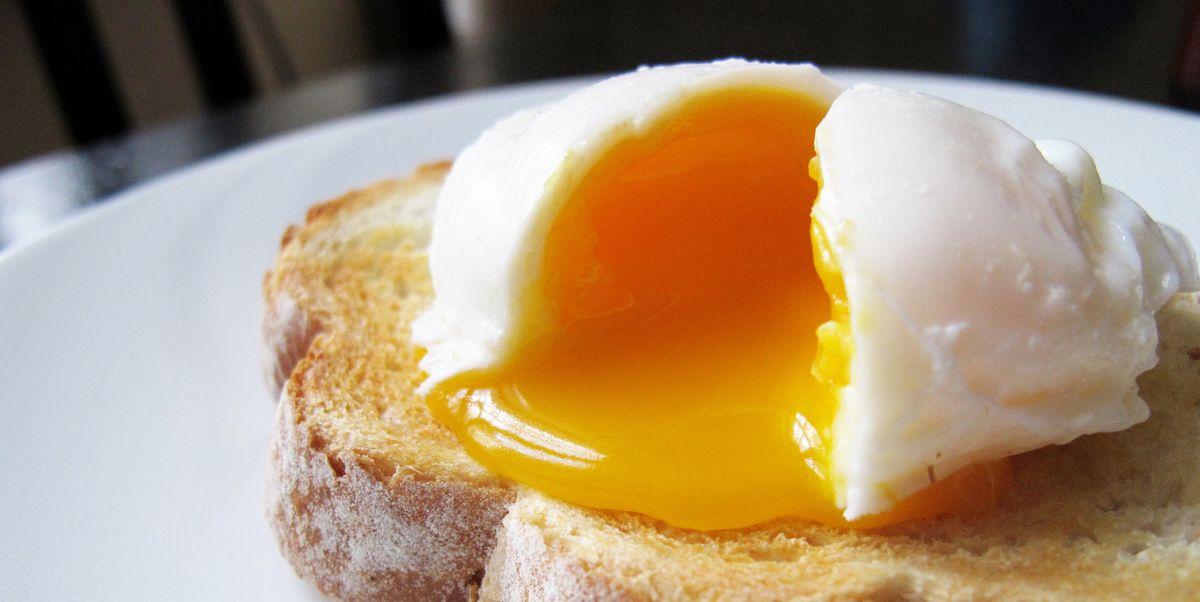
Poached eggs are a component of many dishes. The most famous is eggs benedict, an American breakfast. It’s an egg on a slice of bread with ham or salted salmon and hollandaise sauce.
A poached egg is an egg boiled without a shell, with a delicate runny yolk. At the same time, the protein is completely cooked, but also remains soft
Poached eggs require the freshest possible eggs. This is the main secret of the dish. The protein of a not very fresh egg does not hold its shape: if you drop such an egg on a plate, the protein will spread. A fresh egg has an elastic protein. Therefore, the poached egg turns out to be compact, without broken rags. But even in a fresh egg, part of the protein is diluted during transportation. This is easy to see if you break a raw egg on a plate. You will notice that there is protein that sticks around yolk, and there is part of the white that has spread on the plate. It is this part of the protein that needs to be ‘cut off’.
- Crack the egg into a fine sieve or slotted slotted spoon. Wait until the liquid fraction of the protein drains, and pour the egg into a small cup – ideally into a coffee cup.
- Pour water into a shallow saucepan, salt well and heat until the first signs of boiling so that bubbles just begin to rise from the bottom of the saucepan. The water temperature should be 194 °F (90°С).
- Carefully raise the edge of the cup to the surface of the water and let the egg slide into the middle of the saucepan. It is very important to lower the cup to the very surface of the water before turning it over. The protein itself will cling around the yolk. You can only use a tablespoon to help the protein form a little. Cook for 3-5 minutes depending on the size of the egg. The protein coagulates and turns from clear to white and elastic, while the yolk remains liquid.
- Remove the egg with a slotted spoon, let the water drain (you can wet the bottom of the slotted spoon with a napkin) and transfer the egg to a plate.
