

Oatmeal easter cake with caramel

Share it on your social network:

Or you can just copy and share this url

Ingredients

Adjust Servings:
dough
120 g oat flour
100 g egg
30 g corn starch
20 g dry milk
120 g ryazhenka
3 g baking soda
vanilla
7 g sweetener
1 g salt
caramel
130 g milk
30 g coconut sugar
2 g sweetener
15 g dry milk
6 g corn starch
WALNUT FILLING
15 g walnut
3 g cocoa butter
5 g erythritis
EGGWHITE GLAZING
15 g eggwhite
37 g isomalt
37 g erythritis

Nutritional information

40 g
Protein
180 g
Carbs
30 g
Fat
990
Calories

Oatmeal easter cake with caramel

RECIPE FOR EASTER

Features:
  • Oven
Cuisine:
  • 2 hour
  • Serves 2
  • Hard

Ingredients

  • dough

  • caramel

  • WALNUT FILLING

  • EGGWHITE GLAZING

Directions

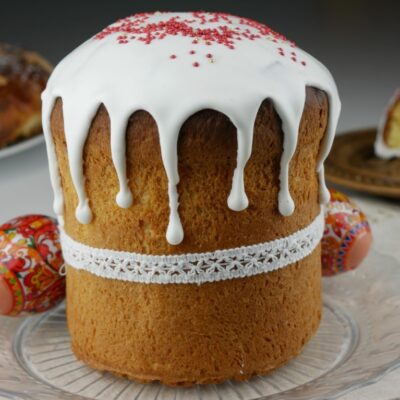
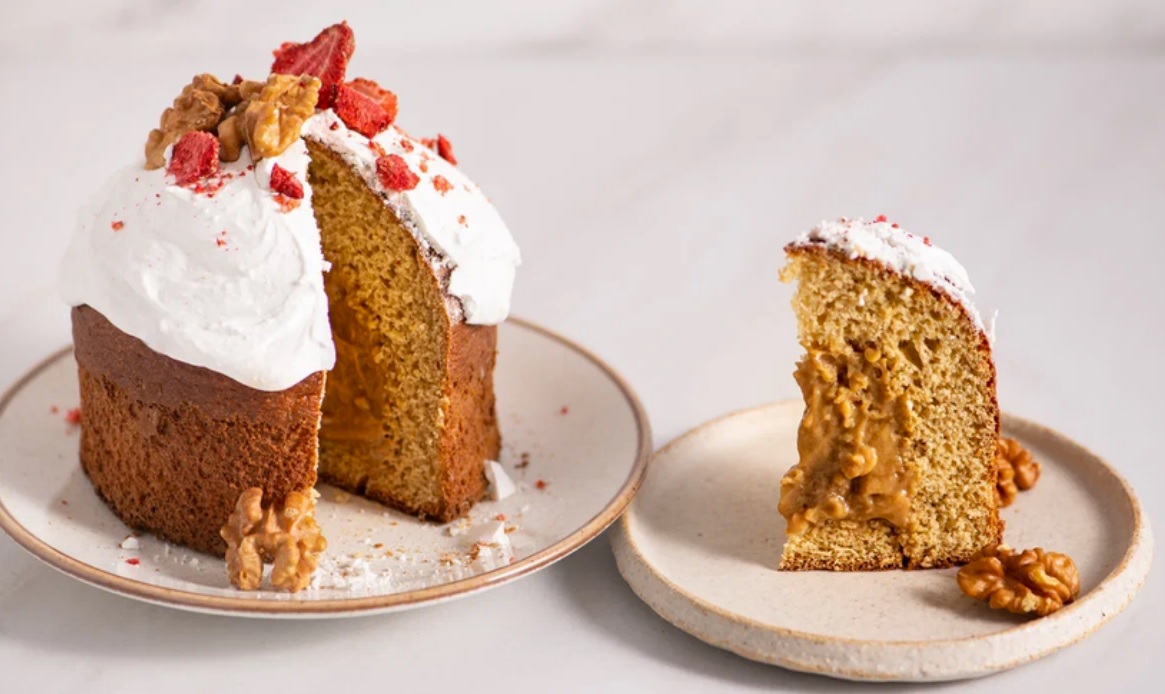
Oatmeal easter cake with caramel (paska) a delicious dessert for your table for Easter.

The protein glaze that I give you in this recipe is extremely versatile and can be combined with many other recipes.

For a vegan version of this glaze, you can replace the protein with aquafaba (water, which remains in cans with canned chickpeas), or with potato protein diluted according to the instructions – it can be purchased at pastry shops. The vegan version will most likely have to be whipped longer (at least 15-20 minutes at maximum speed).
You can make this paska without caramel, but in this case, be sure to add more dried fruit to give a taste accent – this dough needs some kind of juicy filling. It can be raisins, dried cranberries, chopped prunes, dried apricots, figs, dates – a mixture or something. Do not forget to soak them before use until soft. Chopped nuts – for example, walnuts, almonds, hazelnuts, pecans – will also perfectly complement the paska.

The sweetener in the recipe is 10 times sweeter than sugar.

Substitutions in the glaze:

15 g of pasteurized egg white can be replaced by 15 g of water and 2 g of albumin.
37 g of isomalt can be replaced with an additional 37 g of erythritol.

All ingredients should be at room temperature!

Steps

1
Done

PREPARING

1. Heat the oven to 347 °F (175 C), top-bottom mode without convection.
2. Prepare a 11 cm diameter paska dish and a sheet of foil to cover it on top.

2
Done

DOUGH

1. Measure the liquid ingredients, mix until smooth
2. Separately mix and sift dry to get rid of lumps. If larger specks of flour remain in the sieve, do not throw them away, return them to the dry mixture.
3. Before combining the two mixtures, make sure that the oven is heated to the desired temperature. The finished dough should not stand and wait for a single minute.
4. Add the dry ingredients to the liquid, punch everything together or mix with a mixer/whisk. If the dough is too thick, add a little milk, if it is too thin, add rice flour.
5. Pour the mixture into a mold, cover it with foil and send it to bake.

3
Done

baking

1. Bake with foil for the first 30 minutes, then remove the foil and bake for another half hour (check readiness with a toothpick - it should come out dry, without sticky dough). It takes about an hour to bake in my oven, but yours may take more or less. If the paska is not yet ready, and the top is already very golden, cover it again with foil.
2. Cool to room temperature, remove from the mold.

4
Done

CARAMEL

1. In a heavy-bottomed bowl mix all the caramel ingredients, if necessary, beat with an immersion blender until smooth.
2. Put on medium heat and, stirring constantly, bring to a boil. Boil for 10 seconds, turn off the stove and stir a little more while the bottom of the ladle cools.
3. Transfer to a bowl, cover with cling film, then place in the refrigerator until completely cooled.

5
Done

CRISP NUTS

1. Finely chop the walnuts and, stirring, fry over medium-low heat until a pleasant aroma appears.
2. Add erythritol (a natural sweetener) to the pan, wait until it melts, mix walnuts with it.
3. Turn off the stove while the pan is still hot, add finely chopped cocoa or coconut oil, mix.
4. Spread the nuts on the parchment, cool, put in the refrigerator until completely cool.
5. Mix nuts and caramel that has cooled.
6. Cut a circle of 4-5 cm in diameter and about 1 cm thick in the center of the bottom of the paska. Do not throw away the bottom, put it aside. Remove the center of the biscuit from the opening, making room for the filling.
7. Fold the caramel with nuts into a paska, to the level where the bottom will be (leave about 1 cm to the edge). In order for the bottom to be well fixed in the future, spread a little cream with a spoon on the sides so that it 'glues' the place where the wall of the paska and the biscuit disk meet. Put the bottom back in place.
8. Carefully wrap the paska in a bag or cling film and put it in the refrigerator for 8-10 hours.

6
Done

glaze

1. Grind erythritol and isomalt into powder.
2. Combine with egg white, place in a water bath and heat to 104-140 °F (40-60 C) so that the sweetener dissolves more easily.
3. Beat the glaze (3-5 minutes) - it will become dense, but at the same time airy, will increase in volume, and will not flow out of the bowl when tilted.
4. Apply the glaze to the paska, decorate it as desired.

Ready paska can be stored in a container or bag in the refrigerator for 72 hours.

Chef Hanna

Easter cake with almonds and dried apricots
previous
Easter cake with almonds and dried apricots
Chocolate waffles
next
Chocolate waffles
Easter cake with almonds and dried apricots
previous
Easter cake with almonds and dried apricots
Chocolate waffles
next
Chocolate waffles